Learn / The research
The research · 2 min read
Does seed cycling work? What the research says


Early studies of seed cycling are encouraging, and larger trials are needed to confirm them. A 2025 review of 10 studies found positive results for menstrual symptoms. Most of the wider research looks at the nutrients in the seeds, which tells us they matter.
In short
- The whole routine has been studied in a small number of trials, with encouraging results.
- The individual nutrients (fibre, omega-3, vitamin E, magnesium, zinc) are much better studied.
- The seeds are nutritious, high-fibre, essential foods either way.
What has been studied
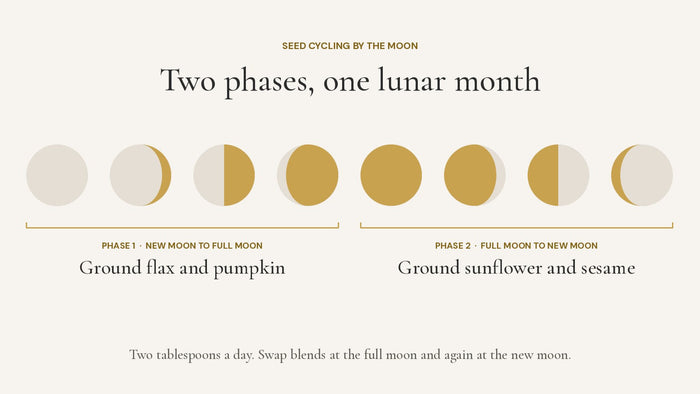
The full routine. A 2025 systematic review brought together 10 studies with 635 participants. It found encouraging results for menstrual symptoms, hormone measures and metabolic health, and its authors call for larger randomised trials to confirm them. [1]
One of those studies followed women with polycystic ovary syndrome for 90 days. One group ate flax and pumpkin seeds in the first half of the cycle and sunflower and sesame in the second, alongside a portion-controlled diet. Their results improved compared with a group that had no treatment. The groups were small, 20 women each, and the seeds were combined with diet changes. [2]

Flax by itself. Flax is the most studied of the four seeds. In a 12-week trial, women who ate 30g of ground flax a day alongside lifestyle advice had lower insulin than women given the advice alone, and more of them reported regular cycles (81% compared with 50%). That is about three times the flax in a daily Phase 1 serving. [3]
An earlier study of 18 women recorded ovulation in every cycle while they ate flax seed powder daily, compared with three cycles without ovulation when they didn’t. It was small, and it has not been repeated at scale. [4]
Single nutrients. Calcium, magnesium, omega-3 and vitamin E have each been studied for premenstrual symptoms or period pain, mostly as supplements. The best known is a large trial in which 1,200mg of calcium a day reduced premenstrual symptoms. [5] Two tablespoons of seeds provide a small part of that amount.
Women’s health has been under-researched for a long time, and food is harder to study than a pill. That explains why the evidence is early.

So is it worth doing?
Here is what we can say with confidence and the worldwide anecdotal evidence can't be ignored.
- These are nutritious whole foods. Flax is high in fibre and omega-3. Pumpkin is a source of iron. Sunflower is a source of vitamin E.
- Most adults don’t eat enough fibre. Two tablespoons a day adds a few grams.
- A habit tied to your cycle is easy to keep, and it keeps you paying attention to your own rhythm.
Seed cycling isn’t a treatment, and it doesn’t replace seeing your doctor about symptoms that worry you. It is a simple daily food habit. Give it three months, track how you feel, and let your own body be the evidence that matters most.
We’ll update this page as new studies are published.
Sources
- Efficacy of Seed Cycling as an Integrative Therapy for Premenstrual Syndrome and Polycystic Ovary Syndrome in Reproductive-Aged Women: A Systematic Review. Cureus, 2025. Read the study
- Rasheed N. et al. Effectiveness of combined seeds (pumpkin, sunflower, sesame, flaxseed) as adjacent therapy to treat polycystic ovary syndrome in females. Food Science & Nutrition, 2023. Read the study
- Haidari F. et al. The effects of flaxseed supplementation on metabolic status in women with polycystic ovary syndrome. Nutrition Journal, 2020. Read the study
- Phipps W.R. et al. Effect of flax seed ingestion on the menstrual cycle. Journal of Clinical Endocrinology & Metabolism, 1993. Read the study
- Thys-Jacobs S. et al. Calcium carbonate and the premenstrual syndrome. American Journal of Obstetrics and Gynecology, 1998. Read the study
Seed Cycle blends are foods. Menstrual cycle lengths vary. Nutrient claims as authorised for foods in GB. This article is not medical advice.
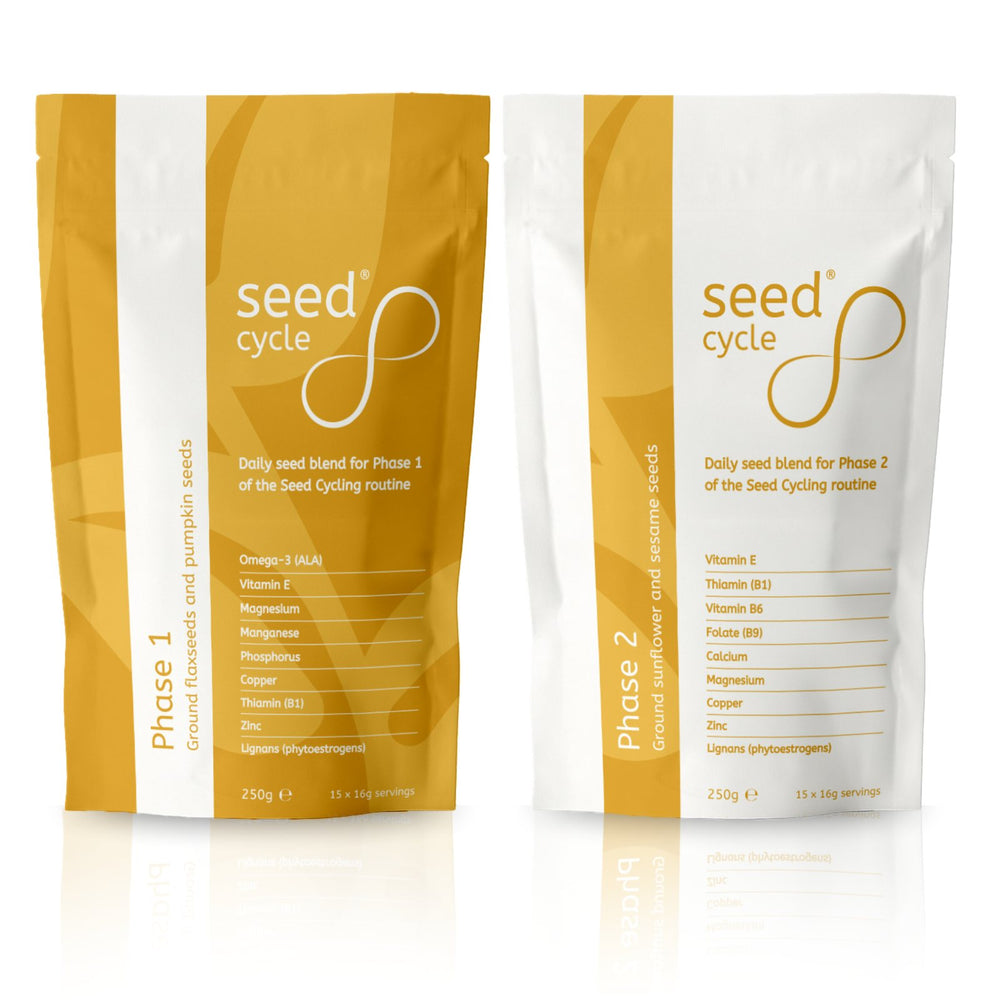
Rather not grind your own?
Our Phase 1 and Phase 2 blends are ground in small batches and ready to use. Two scoops a day, no measuring. Grinding your own works just as well.
Shop the blends